
Check Google’s Search Status Dashboard Before You Blame an Update
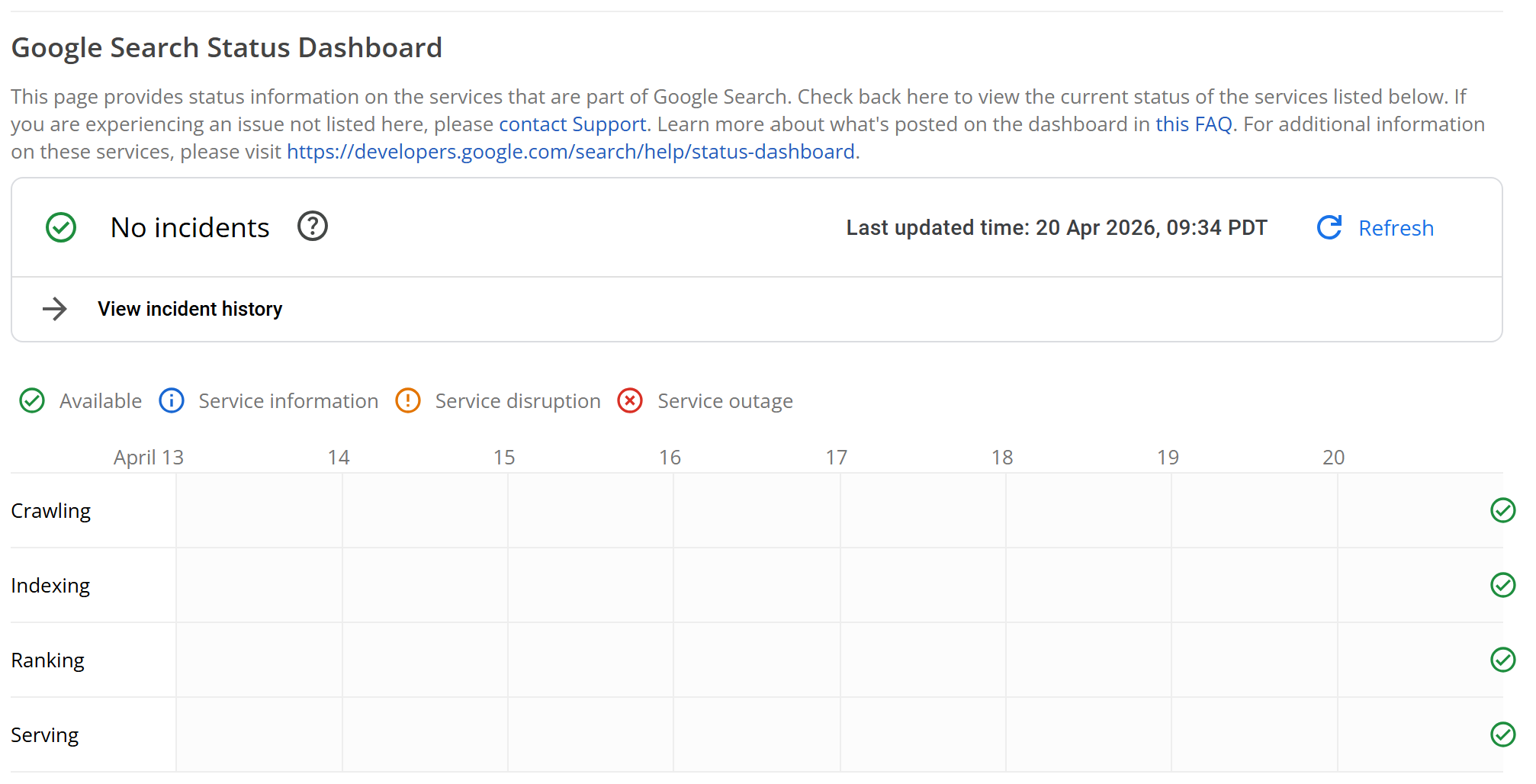
Every time rankings wobble, the SEO world turns into a group chat where everybody suddenly has a “confirmed update” from a guy who knows a guy. Google’s own Search Status Dashboard exists for exactly this reason: it shows widespread issues across crawling, indexing, serving, and ranking, and it calls out significant ranking updates when Google actually wants site owners to know about them. If your traffic dipped this week and the dashboard is quiet, there is a decent chance the problem is a lot closer to home.
That matters because plenty of teams waste the first 48 hours doing algorithm theater. They rewrite title tags, reshuffle internal links, and start second-guessing perfectly good content when the real problem is usually something boring and expensive, like a broken template, a stray noindex, a redirect mess, or a launch that quietly kneecapped page speed. Before you rip apart a content plan that was working last month, check what Google has actually confirmed and then audit the basics like an adult.
Google says the dashboard is there to report widespread Search system issues and significant ranking updates, not every tiny tremor in the SERPs. Translation: not every ranking drop deserves a panic thread. For local businesses and lean marketing teams, a simple checklist for redirects, crawlability, internal links, and indexation will usually save more traffic than another round of hot takes. And if the site has grown into a technical spaghetti bowl, this is one of those moments when experienced SEO help can save a lot of wasted hours.
The practical move is not complicated. Watch the dashboard, compare it against your own analytics and crawl data, and make big changes only when you have evidence instead of vibes. SEO is already messy enough without inventing phantom updates and then spending the next week cleaning up your own overreaction.




news via inbox
Subscribe to get SEO Tips and Tricks directly in your inbox!